“Peru Could Be a World Leader Thanks to Its Biodiversity” — A Peruvian Doctor on Medical Cannabis, Stigma, and the Future of Therapy
Dr. Cesar Salvador Sanchez Marin — a physician and surgeon specializing in traditional, complementary, and integrative medicine — discusses how the medical cannabis system works in Peru, why the full spectrum of cannabinoids matters more than isolated compounds, and what’s holding the country back from reaching its potential.
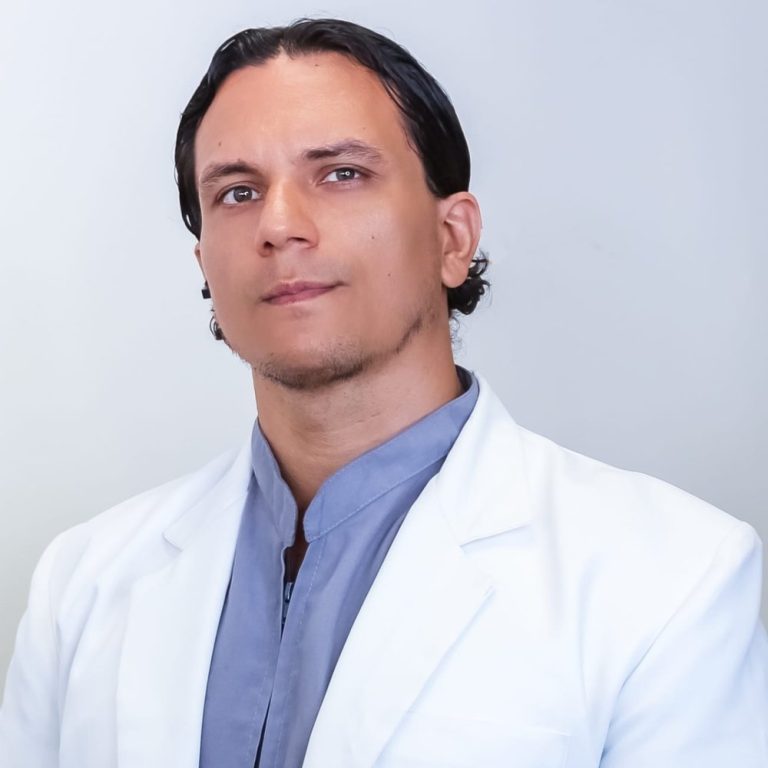
Dr. Sanchez Marin is a practicing physician from Peru and the founder of Centro Médico Holístico. He holds a doctorate in biomedical sciences, a master’s degree in medicine, and a master’s in health services management, along with an international diploma in natural and alternative medicine. He teaches and conducts research at the Pedro Ruiz Gallo National University and César Vallejo University, and is involved in developing clinical and basic research projects at the Lambayeque Regional Hospital. He is an active member of the Peruvian Medical Association for Palliative Care (AMPCP) and the Peruvian Society of Complementary and Alternative Medicine (SPEMAC), as well as a co-founder of the HAMPI Foundation.
We spoke with the doctor about the legal landscape, clinical practice, and the future of cannabis therapy in Latin America.
Tell us about yourself — how did you come to work with medical cannabis?
I’m a doctor specializing in traditional, complementary, and integrative medicine. I came to cannabis through studying the literature and clinical practice: when I started prescribing it to patients, I saw firsthand how effective it is.
What is the current legal status of medical cannabis in Peru? When was it legalized, and what laws regulate its use?
The options are still limited. The cannabis law was passed back in 2017, but the implementing regulations didn’t come out until 2023. Even now, realizing everything the law envisions — cooperative cultivation, personal growing, over-the-counter sales — remains very difficult.
What forms of medical cannabis are available to patients in Peru — oils, vaporizer cartridges, edibles? Are dried flower buds available?
Everything is available — oils, cartridges, edibles — except dried flower. The key requirement is having a prescription and laboratory certification of the product. Recreational cannabis use remains prohibited.
What conditions can medical cannabis be legally prescribed for in Peru? Are specific diagnoses required?
There are no formal restrictions on diagnoses. In practice, cannabis is recommended for conditions backed by a global evidence base: refractory epilepsy, multiple sclerosis, and chronic pain.
How does the prescription process work — from the first consultation to receiving the product?
Patients can receive their medication on the very first day of consultation. They need to register with the National Registry of Patients Using Cannabis and Its Derivatives for Medical and Therapeutic Purposes (RENPUC), after which the doctor issues a prescription.
Can foreigners legally obtain a medical cannabis prescription in Peru? What documents are needed?
Yes, it’s very simple. All you need is an identity document — a foreign resident card or passport — and a medical consultation.
You’ve mentioned full-spectrum oils with various cannabinoids and flavonoids. How do these differ from pure THC or CBD products, and why do you prefer this approach?
Full-spectrum oils harness the entire therapeutic potential of the plant: beyond CBD and THC — the two most studied cannabinoids — the plant contains over 150 others, as well as terpenes and flavonoids. Products based on isolated compounds lack this richness.
How is dosage determined for each patient? Is there a standard protocol, or is it fully individualized?
As of today, there are no clinical guidelines for standardizing dosage — and these represent the highest level of evidence in medicine. So dosing is determined based on the doctor’s experience, the patient’s diagnosis and condition, and how the individual responds to the medication.
What is the approximate cost of treatment — consultation, prescription, and the cannabis products? How does it compare to other Latin American countries?
Prices depend on quality and concentration. A consultation costs 50–150 soles ($15–45), and oils range from 50 to 200 soles ($15–60) per 10 ml bottle.
You mentioned that oil prices and concentrations vary widely in Peru due to a lack of standardization. Is there a quality control or certification system for medical cannabis products?
For now, the certification system only covers products that have been approved by the General Directorate of Medicines, Supplies, and Drugs (DIGEMID).
What has been your clinical experience with cannabis for conditions like PTSD, insomnia, and chronic pain? What results do you typically see?
The results are excellent. Cannabis effectively helps normalize sleep, improve mood, and restore appetite. In my observation, patients’ conditions improve by roughly 80–90%.
You also mentioned the potential therapeutic use of psilocybin microdosing. Is this legal in Peru, and how does it relate to cannabis-based treatment?
From a legal standpoint, the situation is ambiguous. I believe I’m one of the few practitioners experimenting with combining cannabis and psilocybin to enhance the therapeutic effect of both approaches — improving symptoms and supporting cognitive processes. But all of this work is conducted strictly within the framework of clinical research at my holistic medical center.
How do Peruvian society and the medical community generally perceive medical cannabis? Is there still stigma?
The stigma is enormous. Typically, only those who turn to cannabis as a last resort — after trying everything else — come to appreciate its therapeutic benefits.
What would you say to patients from countries where medical cannabis is not yet available who are considering seeking treatment in Peru?
Peru, thanks to its biodiversity, could be a world leader — the country can grow many different varieties of cannabis and develop more targeted, precise treatments. Unfortunately, political and social factors still stand in the way. Nevertheless, Peru remains a good option for those looking to access cannabinoid oil therapy.
How do you see the future of medical cannabis regulation in Peru and Latin America more broadly?
Change is coming slowly, but I look to the future with great optimism. Sooner or later, this medicine will receive the recognition it deserves.
The Legalize Belarus editorial team thanks Dr. Cesar Salvador Sanchez Marin for this open and insightful conversation. Peru’s experience shows that even with legislation in place, the road to accessible cannabis therapy remains long — which makes the voices of practicing physicians willing to share their knowledge all the more valuable.
Learn more about Centro Médico Holístico and get in touch through their social media:
Можно, если осторожно
Вступай в наш клуб за гуманную наркополитику. Твои данные не будут переданы третьим лицам.

Unless otherwise noted, text of this article is licensed under the Creative Commons Attribution 4.0 International License.