Why Does Ecstasy Cause Stronger Addiction Than Pure MDMA?
The Variable Reinforcement Hypothesis and Unpredictable Pill Composition.
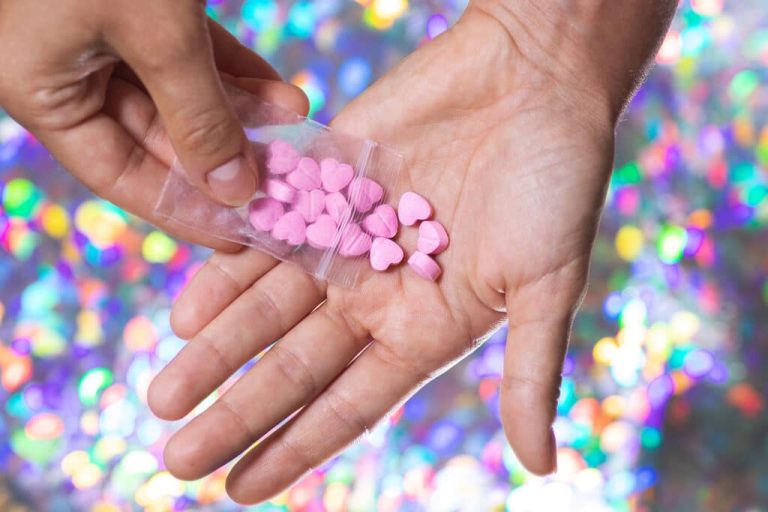
Ecstasy and MDMA are often used as synonyms, but from a pharmacological perspective they are far from the same thing. MDMA (3,4-methylenedioxymethamphetamine) is a specific chemical compound. Ecstasy is a pressed tablet that may contain MDMA, but almost always contains other substances as well. This difference, paradoxically, can make ecstasy more addictive than pure MDMA — and the mechanism of this effect is well-studied in behavioral psychology, though it has not yet been applied to this context.
What Do Ecstasy Tablets Actually Contain?
Empirical studies of ecstasy tablet composition show significant variability. According to Wikipedia data, referencing EMCDDA and DEA reports, ecstasy tablets often contain MDA, MDEA, other amphetamine derivatives, caffeine, opiates, and painkillers. Some tablets contain no MDMA at all. The average MDMA content in a tablet is 70–120 mg, but purity varies greatly — from 30–40% in crushed tablets to nearly pure substance.
The U.S. National Institute on Drug Abuse (NIDA) confirms that ketamine, amphetamine, synthetic cathinones (“bath salts”), MDA, and methamphetamine have been found in ecstasy tablets.
Data from the United Kingdom demonstrates the dynamics of this problem: according to sample screening results at music festivals, in 2019, 93% of samples contained MDMA, but by 2021 this proportion had dropped to 55%, with a sharp increase in the presence of cathinones and caffeine.
Why Is This Important for Addiction Formation?
MDMA is primarily a serotonin releaser. It causes empathy, euphoria, and feelings of closeness, but has relatively weak effects on dopamine reward pathways, which underlie compulsive behavior. According to a study published in PMC, methamphetamine is significantly more reinforcing than MDMA, both in animals and humans. Many synthetic cathinones found in ecstasy are also more potent and induce more sustained self-administration in rodents than MDMA.
Thus, a person taking an ecstasy tablet with amphetamine or cathinone adulterants receives simultaneously:
- An intense emotional experience from the serotonergic action of MDMA (the subjective “magic”).
- Stronger dopaminergic stimulation from the adulterants (the neurobiological “hook” of addiction).
But there is also a third, less obvious factor.
The Variable Reinforcement Effect: The Tablet as a Slot Machine
In behavioral psychology, it is well-established that variable (intermittent) reinforcement — when a reward is unpredictable in magnitude, quality, or the very fact of its appearance — forms the most persistent behavior, maximally resistant to extinction. This is precisely the principle on which gambling operates.
Studies on primates have shown that cocaine and remifentanil induce significantly higher levels of self-administration when available on a random ratio schedule compared to a fixed schedule. The effect is especially pronounced at a high “cost” of obtaining a dose. The authors directly note: if the user is uncertain about the quality of the acquired drug, drug-seeking and acquisition behavior intensifies.
Experiments on rats confirm that unpredictable intermittent access to reward sensitizes reward pathways, enhances motivation, and increases the ability of associative stimuli to trigger seeking behavior. Variable schedules of sucrose reinforcement caused greater dopamine release, cross-sensitization to amphetamine, and greater amphetamine self-administration.
A separate study showed that random interval reinforcement schedules increase resistance to punishment during cocaine self-administration in rats — in other words, behavior continues despite negative consequences, which is a key feature of addiction.
Ecstasy as an Unintentional Variable Reinforcement System
Each ecstasy tablet is essentially a lottery. Variability exists across several dimensions:
- Dose: MDMA content — from 0 to 200+ mg.
- Composition: sometimes pure MDMA, sometimes MDMA with amphetamine, sometimes cathinones, sometimes caffeine, sometimes nothing active.
- Quality of experience: due to different composition, the subjective effect is unpredictable — sometimes empathogenic, sometimes stimulating, sometimes mixed, sometimes disappointing.
- Temporal profile: different adulterants have different pharmacokinetics, so onset and duration of effect are unpredictable.
Compare this to tested crystalline MDMA, where the user knows the dose, composition is predictable, and experience is reproducible. This is essentially a fixed reinforcement schedule — which, as decades of research show, forms less compulsive behavior.
Thus, ecstasy may represent an unintentionally optimal addiction formation system, combining three factors:
- Variable reinforcement — unpredictable composition creates slot machine dynamics.
- Dopaminergic adulterants — amphetamine, methamphetamine, and cathinones provide a stronger reward signal than MDMA alone.
- Compound conditioning — the unique empathogenic experience of MDMA creates a powerful memory of reward, enhancing triggered craving for repetition.
No single substance combines all three factors. Pure MDMA has the third but lacks strong dopamine reinforcement. Pure amphetamine has the second but doesn’t create such emotional significance. And no pure substance, taken in stable form, generates the variability of the first factor.
The Need for Research
It’s important to emphasize: the model described above remains a hypothesis. Each of its components individually is well-confirmed experimentally, but their combined influence in the context of “ecstasy vs. pure MDMA” has never been studied directly. To verify the hypothesis will require several research directions:
- Epidemiological surveys separating users of tablets and tested crystalline MDMA, with measurement of dependence using validated scales (SDS, DSM-5).
- Natural experiments comparing dependence rates in populations before and after implementation of drug checking services.
- Preclinical animal models comparing self-administration of fixed composition (pure MDMA) with variable composition (MDMA, amphetamine, mixture, or placebo in random order).
- Computational modeling of reward prediction error dynamics under fixed and variable composition.
Until such data is obtained, we cannot assert that ecstasy actually causes stronger addiction than pure MDMA. But the pharmacological and behavioral logic of this hypothesis is convincing enough to warrant testing.
Meanwhile, this hypothesis has practical significance in the context of harm reduction: widespread implementation of composition checking services not only reduces overdose risk but possibly also reduces the addictive potential of use — turning the “slot machine” into a predictable experience.

Можно, если осторожно
Вступай в наш клуб за гуманную наркополитику. Твои данные не будут переданы третьим лицам.

Unless otherwise noted, text of this article is licensed under the Creative Commons Attribution 4.0 International License.