“The Facts Are on Our Side”: Fifty Years Inside Finland’s Drug War. Interview with Risto Mikkonen
Finland spends €10.9 million on drug prevention over three years. Extending one prison in Turku costs €53 million. Risto Mikkonen, 70, has been fighting Finnish drug prohibition since the year it started — and he thinks it’s about to end.
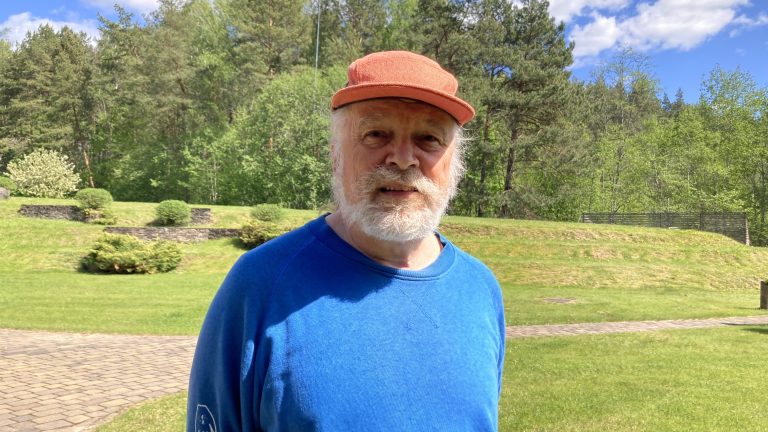
Risto Mikkonen has spent most of his life fighting Finnish drug prohibition — a fight that began around the same time Finland criminalized cannabis use in 1972, and that he is still waging at 70. He represents the Turku Region Cannabis Association (Turun Seudun Kannabisyhdistys), serves as secretary of the Finnish Cannabis Association (SKYry), and in 2024 spoke at the Legalize Belarus School.
We talked to him weeks after the Finnish parliament rejected a citizens’ initiative to legalize cannabis — 145 votes to 18, on 18 February 2026. It was the second such defeat in four years: a decriminalization initiative failed in 2022. And yet the ground is shifting. In November 2025, the Left Alliance became the second parliamentary party, after the Greens, to put legalization on its agenda. Meanwhile, Finland holds one of the grimmest records in Europe: its drug users die roughly ten years younger than the European average, and 2023 brought a record number of drug deaths — prompting the government to launch a €10.9 million prevention program for 2025–2027.
We asked Risto what half a century of losing — and slowly winning — has taught him.
You remember Finland before and after the criminalization of use in 1972. What were politicians saying back then — and which of their predictions came true?
My first experiences with cannabis date to about that time, so I have lived under prohibition my whole life. Only later did I learn how harsh and misleading the official rhetoric was — but one has to remember that the parliamentary vote in 1972 was very tight, 92 to 80. There were plenty of parliamentarians critical of harsh drug policy even then.
Punishment was meant as a symbolic message to young people: using drugs is not a good choice. Half a century later, organized criminal gangs control the drug market inside our prisons. The policy has left prisons overcrowded and made drug users afraid to seek help. The original decision was built on wishful thinking — and yet the failure has only fueled demands for harsher policy and longer sentences. Now the government is even proposing that children under 15 could be detained for up to three days.
On 18 February 2026, parliament rejected the legalization initiative — 145 to 18. Is that a defeat for you, or a stage in a longer process? What did the campaign change, despite the vote?
We had a realistic view of the political process, so the rejection was, again, a defeat. But the campaign found new allies and pushed the idea of legal regulation deep into society. The country’s top legal scholars are now on our side, and Helsingin Sanomat, Finland’s biggest newspaper, found 140 physicians among the signatories. Two parties — the Greens and the Left Alliance — now have cannabis legalization in their party programs.
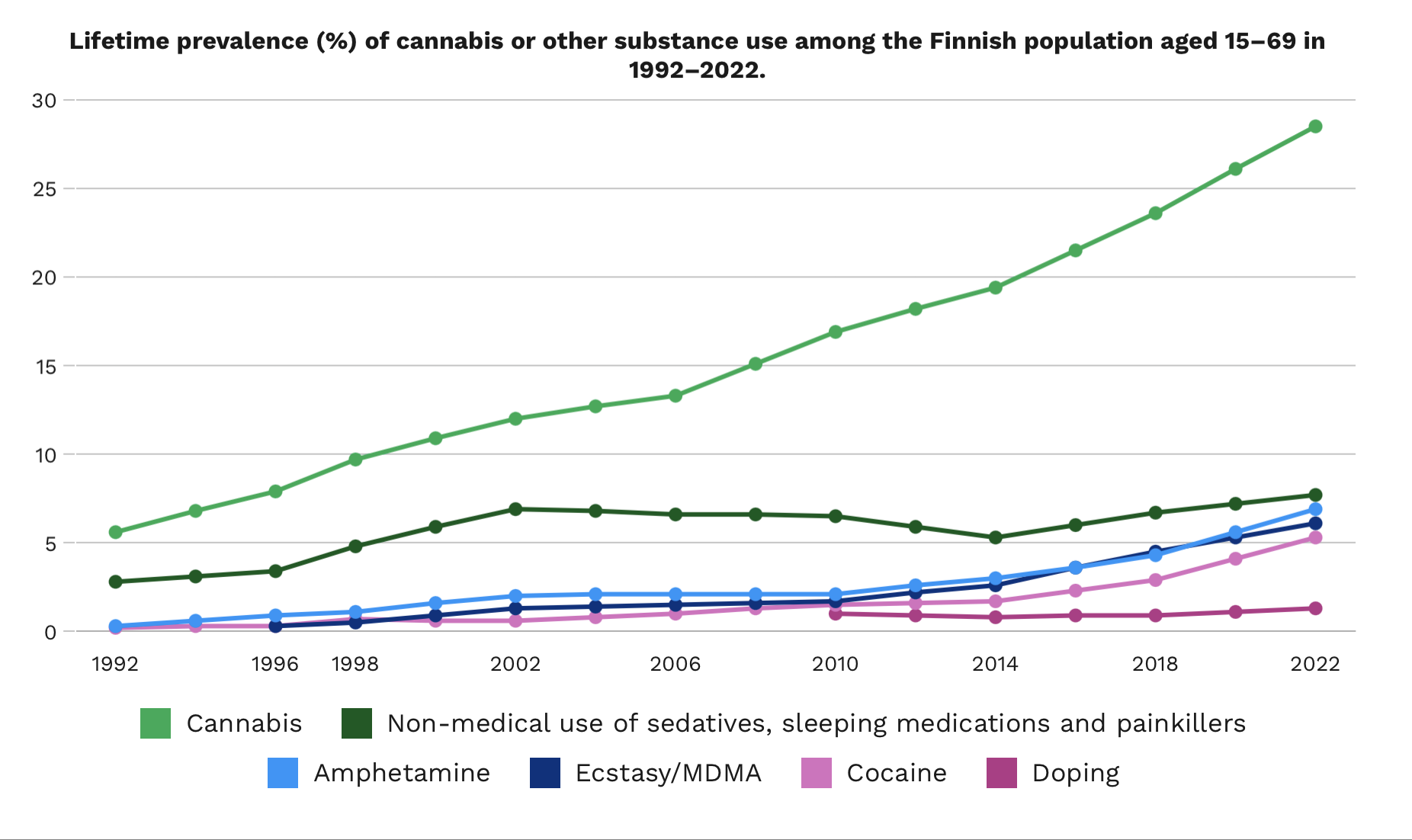
We also believe the debate has moved public opinion. There are no fresh poll figures, but already in 2017 a large majority of Finns supported medical use of cannabis, and by now more than a million Finns have at least tried it.
And there was something new: Finland’s first citizens’ assembly experiment. A selected group of people formed an opinion on four different initiatives, then followed the debate, read the reasoning behind each one, and voted again. Support for our initiative grew markedly compared to the others once people simply learned more about it. That tells you something.
We are already preparing a third initiative for the 2027 elections. The political situation can change: the Greens and the Left Alliance could end up in government with the Social Democrats, who are leading the polls now.
Here is a paradox: polls are softening, two parties officially support legalization — and yet 145 votes against. How do you explain this gap between society and politicians?
Drugs remain a deeply moralistic territory in politics. But we hear stories of cracks in every party on this issue. All political youth organizations — except the far-right party’s — support either legalization or decriminalization. Depending on the party, there was more or less open pressure to vote against our initiative, and many representatives simply chose to stay away from the vote. We think the experience from Germany will change opinions here too.
Finland is among the worst countries in Europe for drug deaths of people under 25. Why hasn’t this tragedy become an argument for reform — and why does it sometimes work in the opposite direction, in favor of prohibition?
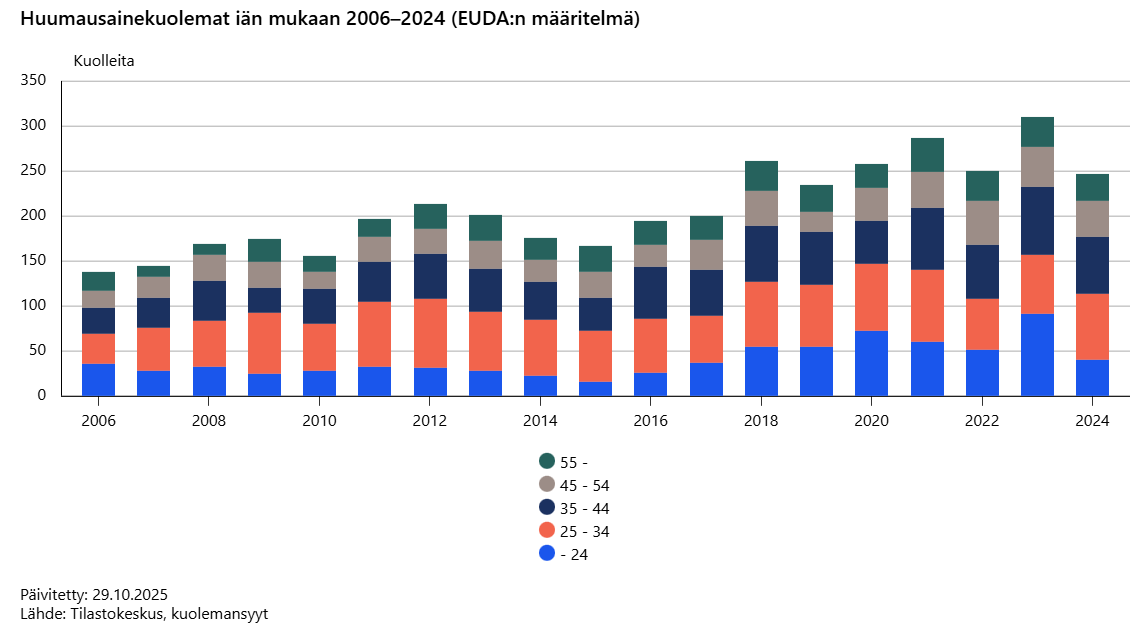
After the record year of 2023 there was a drop in 2024, especially among people under 25 — from 90 deaths to 40 — though deaths rose in the 25–34 group. In total, 247 people died of drug-related causes in 2024. Drug deaths have tripled since 2000, and the average age of death is 34 in Finland against 44 in the EU. The main killer is buprenorphine combined with other substances. There is year-to-year variation reflecting the drug market — which substances circulate, at what price and potency — but these deaths are overwhelmingly preventable.
Our interior minister is a far-right politician with a police background. During her term, customs and police have gotten more or less whatever they wanted. The drug scare is one of the levers used to expand the resources and powers of the criminal-control sector. Their rationale is that society must do everything to save at least one life — an absurd statement when we plainly don’t care about the rest.
Drug deaths are tied to social inequality. Poverty, unemployment and mental illness are linked to problematic use. People with simultaneous mental health and substance problems fall into a health-care limbo. The disadvantaged have no choice but to keep using — and to sell drugs to finance their use. And prohibition makes substances stronger. That is the mechanism by which prohibition fuels problematic use instead of curbing it.
Our right-wing government has chosen criminal control over harm reduction and cut the health and social budgets. Prisons are overloaded — the latest figures are 3,000 places and 3,900 prisoners — and suicides inside prisons have increased. The government’s answer is to build new prisons and expand old ones. The prevention program for 2025–2027 got roughly €10.9 million. The extension of the Turku prison alone costs €53 million. That is Finnish drug policy priorities in two numbers.
The Legal Affairs Committee leaned on a THL report to reject the initiative. How is scientific evidence used — or distorted — in Finnish political decision-making?
We were genuinely surprised by the statement of THL, the Institute for Health and Welfare, because it was almost the opposite of their position during our previous initiative. Back then, THL researchers rejected the so-called gateway hypothesis and supported decriminalizing drug users. This time, their expert worried, for example, about children in households where parents grow cannabis. Somehow I smell political pressure here.
More generally, politicians use scientific evidence selectively. Most of the opposing arguments in the parliamentary debate were personal sentiment and old-school talking points — markedly different from the committee hearings and expert statements. I think the floor speeches were aimed mainly at the electorate; there was no real debate. The politicians who oppose any change have dug so deep into their drug-war bunkers that only generational change will move Finnish drug policy.
Medical cannabis has been legal since 2006, but stories like Mika’s on MTV Uutiset — “it saved my life” — show that access is a separate battle. What is the reality for a patient in 2026?
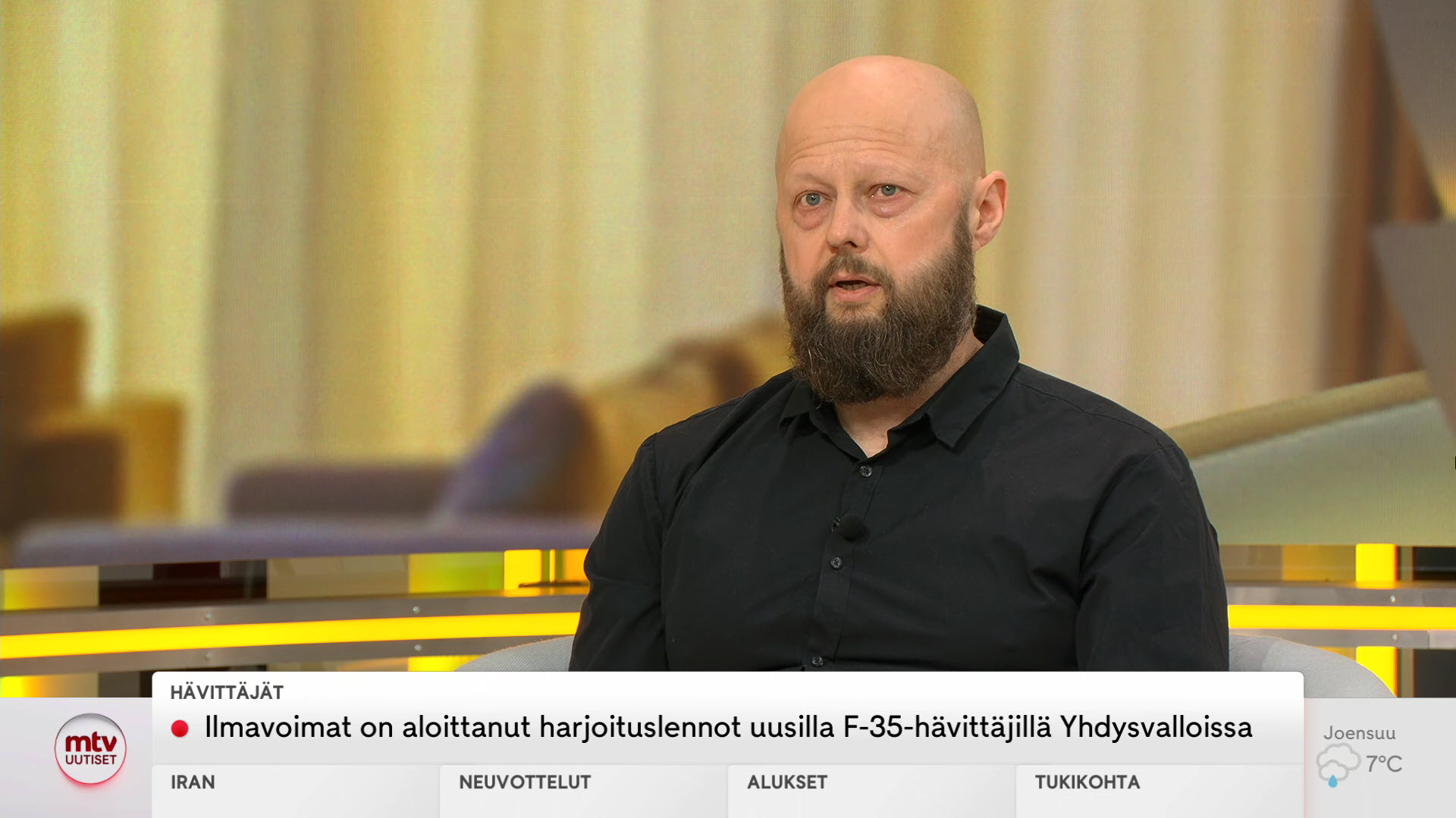
I don’t know the exact number of patients with cannabis prescriptions, but it has fallen from a couple of hundred to a couple of dozen. I see two main reasons. First, practitioners don’t know enough about cannabis for various ailments and are reluctant to prescribe it. Second, there is pressure from the controlling authorities: doctors have lost their licenses to prescribe stronger medicines, and even the threat of that deters cannabis prescriptions.
Patients also report very negative attitudes from health-care personnel the moment they mention cannabis. So we now advise people not to bring up the subject at all — and this is a serious problem, because a patient must be able to speak freely about everything that affects their health, treatment or medication. We published a comprehensive guide for people seeking a prescription, and one piece of advice in it is to lie, because honesty can cost you access to other medications or care. Think about what it means when a patients’ association has to give that advice.
Two citizens’ initiatives collected 50,000 signatures each — and both were rejected. Does this instrument work at all? What will you do differently the third time?
The Finnish citizens’ initiative system serves the bureaucracy, not the people. The signature threshold is too high, and an initiative simply dies if parliament stalls and fails to handle it before the next elections.
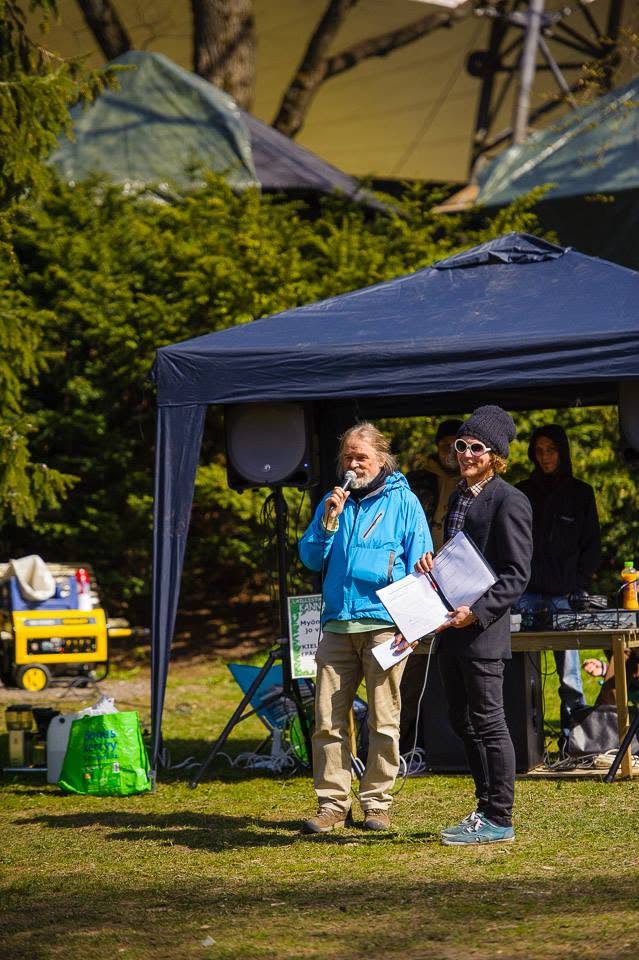
This time we plan to present a full draft law on how to regulate the cannabis business in Finland. If we can’t finish it before our deadline, we will submit a legalization initiative instead. The same network will run the internet and social media campaign — and I’d guess there are more people willing to sign now than four years ago. I can smell it when I walk along the riverside in Turku!
In this initiative we will stress the relationship between the international drug conventions and general human rights obligations. There are still too many examples around the world of these conventions being used to suppress people’s rights to health and welfare — even though guaranteeing those rights is the system’s explicit purpose. That contradiction has already shifted the UN itself: the UN System Chief Executives Board (CEB) and the Office of the High Commissioner for Human Rights (OHCHR) are calling for change in international drug control. And the International Law Commission reaffirmed in 2019 that under Article 53 of the Vienna Convention on the Law of Treaties, a treaty is void if it conflicts with a peremptory norm of international law — jus cogens. The drug conventions do not stand above human rights; where they conflict, human rights prevail. The conventions are also more flexible than the control authorities admit — they can be modified and modernized by the mechanisms written into the conventions themselves.
Remember what the conventions actually declare as their core value: the health and welfare of humankind — securing necessary medications and combating the evil of addiction. It is very clear that the international control system has lost sight of both. Countries as different as the Netherlands and Iran ground their drug policies in these same agreements. Many countries have already moved toward reform, and the UN has not condemned them — except the International Narcotics Control Board, whose mandate doesn’t even cover this!
Politicians, meanwhile, believe the conventions oblige them to criminalize people who use drugs and are immune to change. Neither is true.
You’re involved in the Nordic Mobilization on Human Rights and Drug Policy — the conference was opened by the Mayor of Oslo, and Aleksi Hupli spoke at the CND in Vienna. What can a Nordic coalition achieve that a national movement can’t?
I wasn’t there personally, but our association and the Humane Drug Policy Association sent representatives. The networking was valuable: the problems are much the same in every country, with small national nuances. And one has to remember that the prohibition camp has its international networks too — what the Swedish drug police promote today can become Finnish practice tomorrow.
The practical outcome was the launch of the Nordic Network for Human Rights and Drug Policy. The goal is to promote drug policies grounded in human rights across borders, and to amplify the voices of people who use drugs and of civil society. This kind of cooperation also matters at the international level — at the Commission on Narcotic Drugs and other arenas.
You’ve quoted Bruun and Christie’s “The Good Enemy”: the most dangerous use of drugs is their political use. Where do you see “narcophobia as a tool” in today’s Finland — and what does that mechanism share with Belarus?
Narcophobia is a tool for wrapping social and political problems into a populist package — you can mix in racism, inequality, whatever you like — and offer one simple solution: repression against drug users.
Accusations of drug use are still used in Finnish politics. One telling example: our previous prime minister, a young woman who liked to let off steam dancing with her friends, was at one point forced to produce a clean drug test. How humiliating, in a country that calls itself a Western democracy! Needless to say, drunken behaviour is not judged the same way.
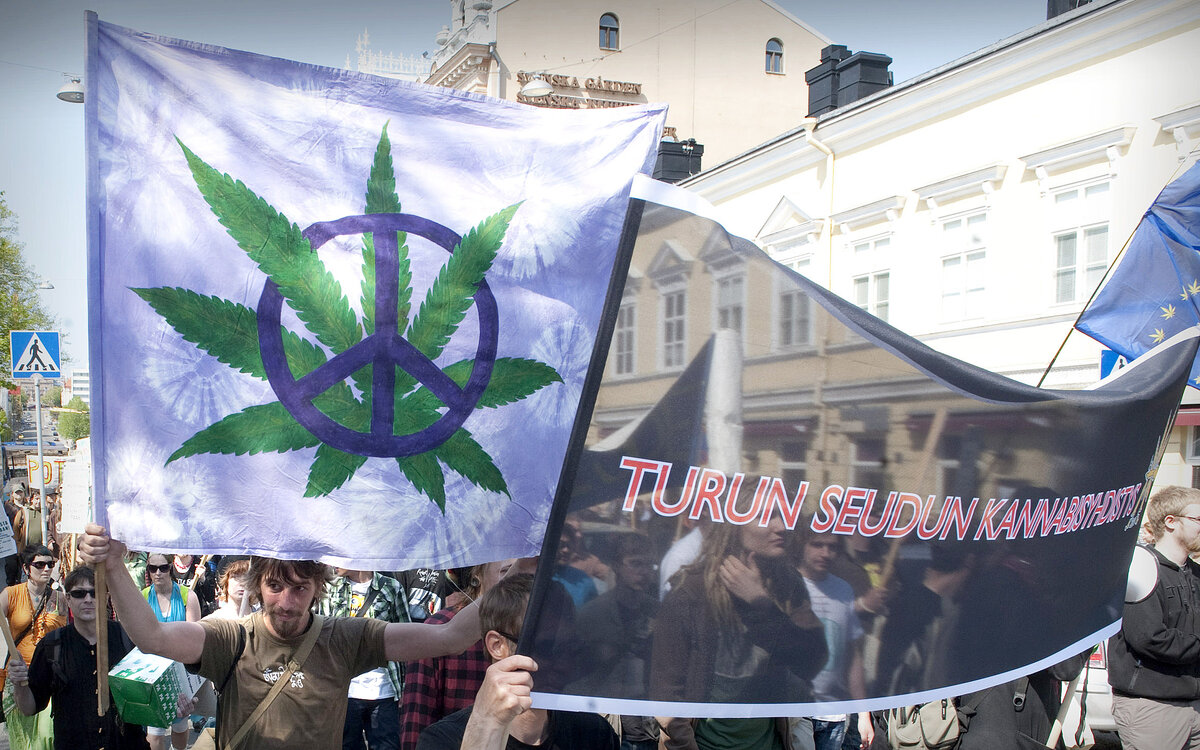
A more recent example is the legislative proposal by the social and health minister to let police detain children under 15 for up to three days. It is justified by a genuinely recent development — organized crime recruiting minors — but the scare itself comes from Sweden, where gangs hire young people, mostly with immigrant backgrounds, and where the police have actively spread this story. The proposal was drafted so hastily that the legality supervisors sent it back to the minister, who represents the far-right party in the government. The whole episode says a lot about the relationship between right-wing politicians and our police forces — and about how ideological the drug war is.
More generally, the drug scare has been used for years to hand new powers and resources to the criminal-control apparatus, and every political party has done its share.
Sweden was for decades the “zero tolerance” model for Finnish politicians — now its capital is shaken by gang wars over the drug market. Has the Swedish crisis changed the Finnish debate?
Swedish drug policy has been Finland’s model since the late 1960s, when members of the Finnish drug police were trained in Stockholm by the legendary drug hawk Nils Bejerot. They imported the infectious-disease model: addiction is a disease that users spread through society, so users must be ostracized and isolated from the general population.
The street-gang panic has now been copied into the Finnish debate too. There is a bitter joke about it: a group of young white boys on the street is a gathering of friends, but a group of boys of colour is a street gang. There is a good portion of racial profiling here, and the police have been active in it. The gang debate is framed as a threat from outside and used to toughen criminal policy and expand police powers to invade people’s privacy — the detention proposal above being one result. So no: the Finnish debate hasn’t changed. The Swedish scare is just the latest chapter in a long history of Sweden exporting its drug policy.
If legalization is off the table for now — what is realistically achievable before the next elections? Consumption rooms, drug checking, expanded naloxone access, decriminalization? Where is the first breakthrough?
The political reality is that under this right-wing government there will be no progress before the next parliamentary elections. There have been small improvements in how problematic users are treated in the Helsinki area, but they are mostly cosmetic. Naloxone, for example, became available to users without a prescription in 2025 — but a package of two sprays costs €50–60 at the pharmacy. For many users that is simply too much.
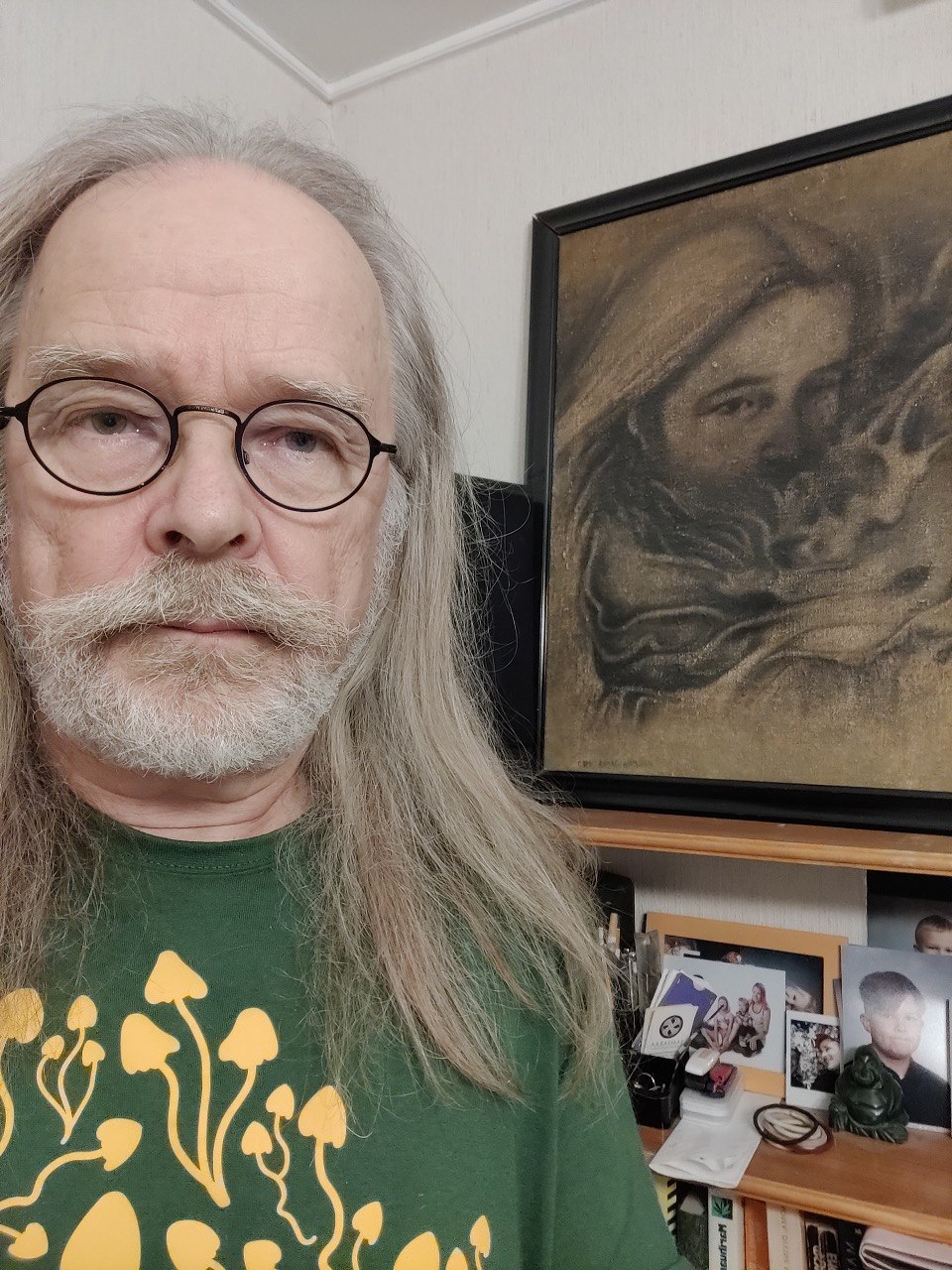
On the other hand, psychedelics — especially psilocybin mushrooms — have received positive attention over the last couple of years. It’s an international trend that has somehow bypassed the traditional drug debate. Under the hard surface, a new kind of conversation about the therapeutic use of substances is quietly boiling, and it may slowly replace the old one.
Belarusian activists operate under conditions where a gram can mean eight years in prison — and many of them are in exile. What advice does someone with fifty years of experience fighting in a democracy give to those fighting a dictatorship?
I think the lessons from Finland are honestly helpless in a situation where people are fighting for their lives. Finland still has an elected president and a legal system one can more or less trust. Even here the drug war has escalated the market and inflated punishments — though a minor cannabis case in Finland today is like a parking ticket: no arrest, perhaps some moralistic preaching from the officer, and a €100 fine.
What I can say is this: when you debate drug policy, stay with the facts, because the facts are on our side. And drug laws, policies and measures that violate basic human rights are void — that is a principle of the international conventions themselves.
You’re 70. What keeps you in this movement — and when, in your honest forecast, will Finland legalize cannabis?
I’ve been saying legalization will come within five years, because the facts are there. But facts are not political reality, where emotions and sentiments count. If the next government is progressive and the two parties introduce legislation, there is a small chance things develop for the better. Even decriminalization of use would be a great step. Full legalization of cannabis commerce is still a dream — but things can move fast. Look at attitudes toward homosexuality: from criminalization to acceptance within a lifetime. And since Finland joined NATO, our closest allies — Germany, the USA, Canada — have all relaxed their cannabis policies. Finnish politicians will have to choose which side of history to stand on.
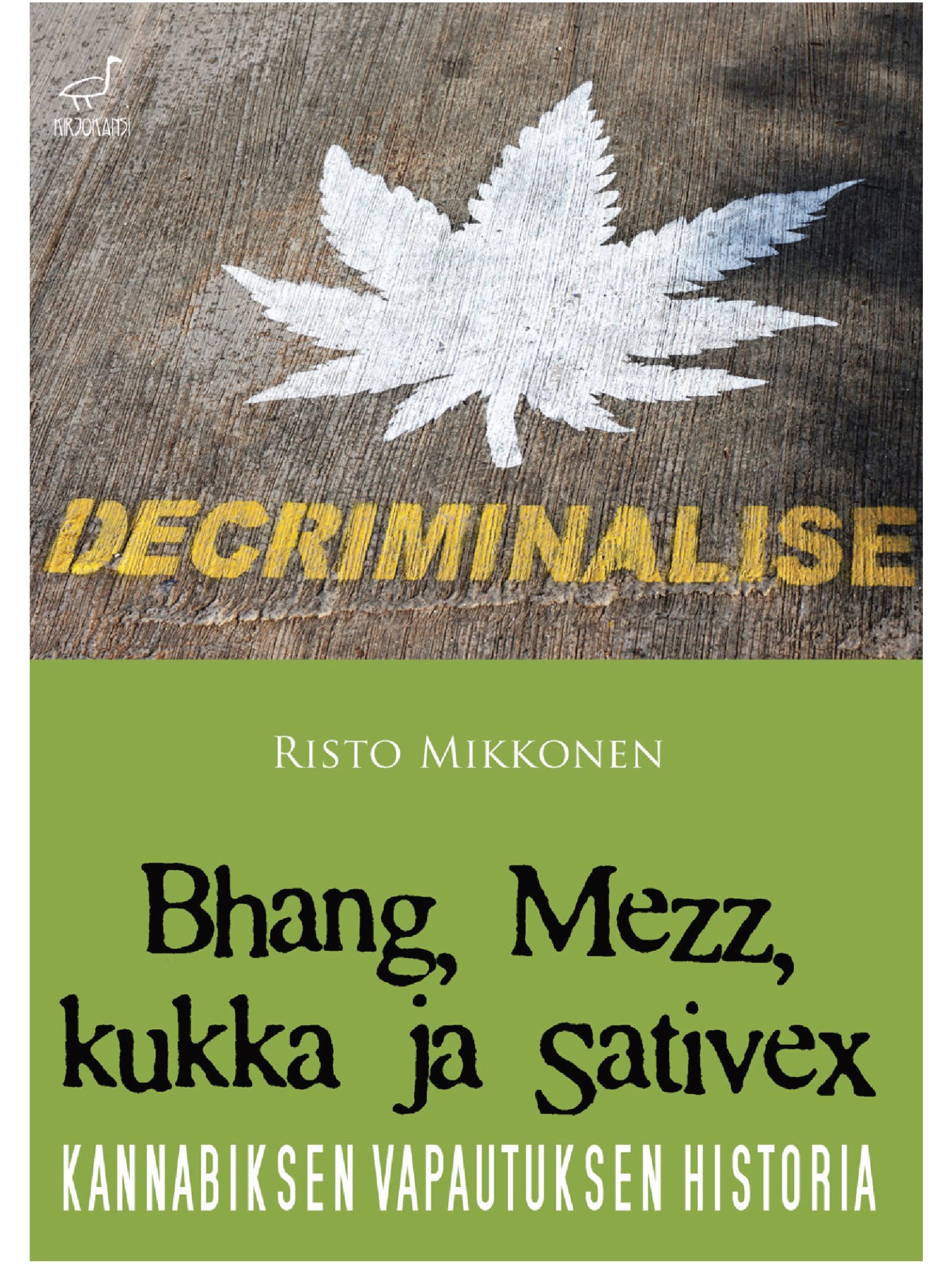
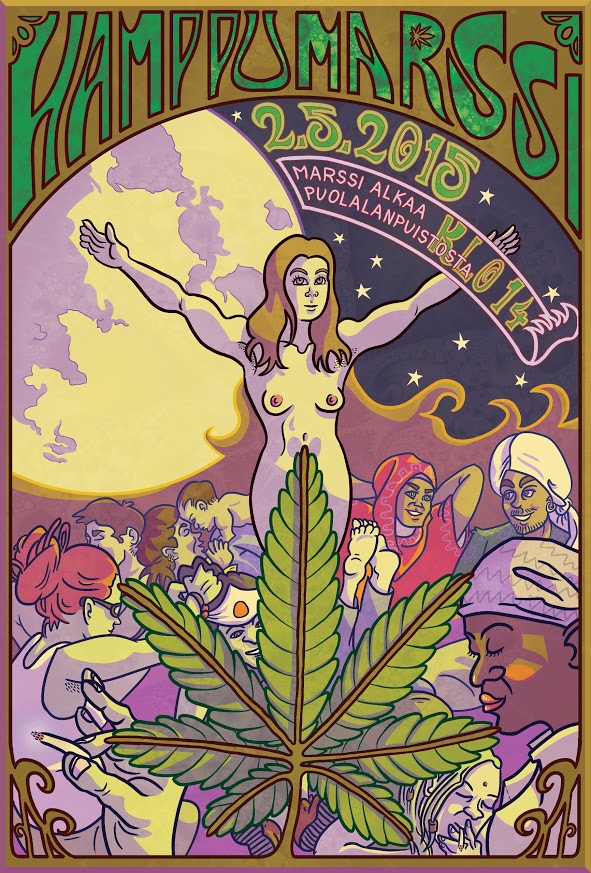
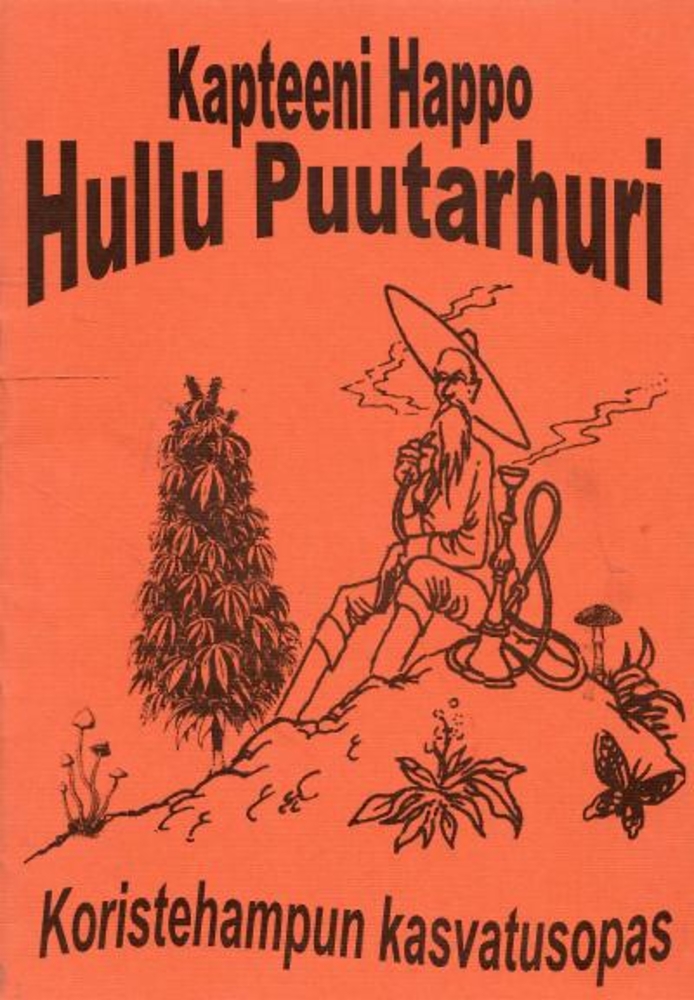
Risto Mikkonen represents the Turku Region Cannabis Association and serves as secretary of the Finnish Cannabis Association (SKYry). The interview was conducted for legalizebelarus.org and is published in English and Russian.
Можно, если осторожно
Вступай в наш клуб за гуманную наркополитику. Твои данные не будут переданы третьим лицам.

Unless otherwise noted, text of this article is licensed under the Creative Commons Attribution 4.0 International License.